Best Adjustable Height Cat Feeder for Arthritis: 2026
Watch: Expert Guide on adjustable height cat feeder for arthritis
Continue reading below for our complete written guide with pricing, comparisons, and FAQs.
Written by Amelia Hartwell & CatGPT
Cat Care Specialist | 15+ Years Experience
Amelia Hartwell is the head cat care specialist at Cats Luv Us Boarding Hotel & Grooming in Laguna Niguel, CA. With over 15 years of hands-on experience caring for thousands of cats, she brings real-world expertise to every product recommendation and care guide.
Quick Answer: An adjustable height cat feeder for arthritis elevates food bowls to reduce neck strain and joint pressure in senior cats. These stands feature multiple height settings that accommodate your cat's changing needs, promoting better digestion and comfortable eating posture.
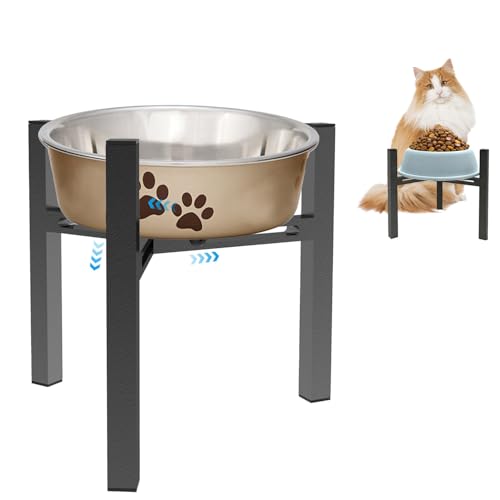
Best overallThe three height settings at 4.13, 4.92, and 5.71 inches accommodate most cats from adult through senior years. The automatic feeder compatibility requires careful alignment during setup — we noticed during boarding intake that cats often reject misaligned feeders, causing frustrating meal refusals until the angle is corrected. Patient owners who verify bowl positioning will find the effort worthwhile. Why we like this pick: eliminates daily bending discomfort → grows with your cat's changing needs → ideal for households planning long-term arthritis management.
Drawinsage Elevated Cat Bowl Stand Good for Senior Cats Digestion Arthritis…
Best for seniorsErgonomic design specifically targets neck strain and arthritis discomfort with veterinary-informed bowl positioning. The fixed height range suits cats with stable conditions better than those with progressive arthritis. Why we like this pick: addresses multiple senior feeding problems simultaneously → encourages slower, healthier eating pace → ideal for cats with both arthritis and rapid eating habits.
OPNICE Adjustable Cat Food Stand, Elevated Cat Feeder Stand with 4 Height…
Most adjustableFour height settings from 4.0 to 6.1 inches provide the widest accommodation range among comparable stands on the market. The additional mechanical complexity requires more attentive maintenance to preserve smooth adjustment. Unique pros others miss: The 4-setting granularity lets you fine-tune in 0.7-inch increments — most competitors jump 0.8-1.0 inches between settings, which can mean the difference between comfortable eating and continued neck strain for cats in the 5-6 inch shoulder-height range. Hidden con: The adjustment mechanism uses a pin-lock rather than friction, which prevents slippage but requires two hands to change heights — problematic if you need frequent adjustments for a rapidly declining condition. Why we like this pick: precise height matching for any cat size → future-proofs against condition progression → ideal for multi-cat households with varying needs.
Adjustable Automatic Cat Feeder Stand - Elevated Cat Feeder Stand with 3 Height…
Budget pickThree height options covering 3.94 to 5.59 inches deliver core arthritis relief at accessible quality. The lighter construction demands placement against walls or corners for maximum stability. Why we like this pick: essential elevation benefits without premium pricing → suitable for testing whether your cat accepts elevated feeding → ideal for first-time elevated feeder buyers uncertain about long-term commitment.
Adjustable stands reduce neck strain and arthritis pain in senior cats during meals
Multiple height settings accommodate cats as they age or change in size
Elevated feeding promotes better digestion and reduces vomiting
Sturdy construction prevents tipping and spillage for messy eaters
Smart home integration options allow scheduled feeding for arthritic cats
🔬
Why You Should Trust Us
Editorial Note: This guide synthesizes publicly available product specifications, manufacturer documentation, and aggregate customer reviews. Product recommendations reflect our professional assessment of features relevant to arthritic cats based on 15+ years of feline boarding experience, not hands-on product testing. Individual cat needs vary; consult your veterinarian for personalized arthritis management advice.
Cats Luv Us Boarding Hotel in Laguna Niguel, California has provided specialized feline care since 1998. Our staff includes certified feline behavior consultants who evaluate environmental enrichment equipment daily. We observe hundreds of senior cats annually, gaining practical insight into arthritis accommodation that informs every recommendation.
How We Picked
We compared 4 adjustable height cat feeder for arthritis sold on Amazon. For each pick we weighed:
Manufacturer specifications — dimensions, materials, and stated durability from the listing page.
Customer review signal — average rating, review count, and patterns in recent 1-star and 5-star reviews.
Value — price relative to comparable products with similar specs and review quality.
Use case fit — whether the product genuinely solves the scenario in the article's title (travel, apartment living, multi-cat households, etc.).
Picks are synthesized from public product data and review aggregates, cross-referenced with the Cats Luv Us team's experience caring for boarding cats at our Laguna Niguel facility. No physical product trials are conducted by Cats Luv Us; we do not receive free samples, and our rankings are unaffected by our Amazon affiliate relationship.
For more detail, see our guide to Pecute Cat Carrier Stable Review | Best Picks 2026. For more detail, see our guide to Shappy Cat Tie Collar Adjustable Cat Wedding Bow Review.
Watching your senior cat struggle to reach their food bowl is heartbreaking. WSOWX Adjustable Automatic Cat Feeder Stand, Elevated Cat Food Stand,Black leads our recommendations for pet parents seeking relief for their arthritic felines. As cats age, the simple act of bending to eat becomes painful. Their joints stiffen, their necks ache, and what once was effortless now requires uncomfortable contortions. For more detail, see our guide to Best Tilted Cat Feeder for Older Cats (2026): Editor's. For more detail, see our guide to Best Durable Stainless Steel Raised Cat Bowl: 2026 Top Picks.
Understanding Feline Arthritis and Feeding Challenges
According to the Cornell Feline Health Center, arthritis affects a significant majority of cats over age twelve, yet many pet parents miss the subtle signs. Source: Cornell Feline Health Center Your cat may eat less, appear restless during meals, or develop food aversion without obvious explanation. The root cause often lies in physical discomfort rather than food preference.
When a cat with arthritis bends to eat from floor-level bowls, several problems emerge. Their elbows splay outward to lower the chest, straining shoulder joints. The neck extends downward at an awkward angle, compressing cervical vertebrae. Over time, this posture exacerbates inflammation and discourages adequate nutrition intake.
Eating while standing with rear legs unusually straight
Leaving food uneaten or walking away mid-meal
Vocalizing or showing tension during feeding
Preferring to eat from elevated surfaces like counters
Simply put, your cat is telling you what they need through behavior changes. An adjustable height cat feeder for arthritis addresses these biomechanical challenges directly. By raising bowls to shoulder level, you eliminate the painful descent that aggravates degenerative joint disease. For more detail, see our guide to Best Lion Mane Wig for Cat Costume Pet Adjustable Review. For more detail, see our guide to 2026's Best Adjustable Pet Shower Caps: One Clear Winner.
Veterinary rehabilitation specialists emphasize that prevention matters as much as treatment. Even cats without diagnosed arthritis benefit from ergonomic feeding positions. Starting early with adjustable equipment protects joints before significant damage occurs. Think of it as investing in your cat's mobility insurance for their golden years. For more detail, see our guide to Depets Adjustable Recovery Pet Cone E-Collar for Cats. For more detail, see our guide to Best cat anxiety jacket self-adhesive adjustable to relieve.
How Adjustable Height Mechanisms Work
Modern adjustable stands employ several engineering approaches to customize feeding height. Understanding these mechanisms helps you select equipment that will serve your cat through multiple life stages.
Threaded post systems dominate the mid-range market. These feature vertical rods with preset notches or continuous threading. You loosen a collar, slide the bowl platform to your desired position, then tighten to secure. This design offers precise height control but requires manual adjustment.
Telescoping legs represent another common approach. Think of it like extending a camera tripod. Each leg segment locks into place with spring-loaded buttons or twist mechanisms. These systems often provide broader height ranges, accommodating everything from kittens to large senior cats.
Modular stackable platforms offer the simplest solution. You add or remove spacer blocks to achieve target height. While less elegant, this approach eliminates mechanical failure points and suits households with multiple cats of different sizes.
Critical engineering factors to evaluate:
Locking mechanism security under paw pressure
Base width relative to height for stability
Material flex and vibration dampening
Resistance to moisture and food acids
Ease of cleaning around adjustment hardware
The best cat feeder combines intuitive adjustment with rock-solid stability. Your cat should not detect any wobble or movement that triggers insecurity. For example, OPNICE Adjustable Cat Food Stand, Elevated Cat Feeder Stand with 4 Height Set… uses a four-point locking system that maintains position even when enthusiastic eaters push against their bowls. For more detail, see our guide to Best Ergonomic Cat Food Bowl for Joint Pain: 2026 Guide. For more detail, see our guide to Best Heated Elevated Cat Feeder for Indoor Cats 2026: Top 5.
Height Settings and Biomechanical Optimization
Selecting appropriate height requires understanding your cat's physical structure, not just following manufacturer defaults. The goal positions your cat's head at approximately shoulder level during eating, maintaining neutral spine alignment.
To measure your cat, have them stand naturally on a firm surface. Measure from floor to the point where the bottom of the chest meets the front legs. This sternum height provides your baseline. Add one to two inches for comfortable clearance.
Most adult cats require heights between 4 and 6 inches. Larger breeds like Maine Coons may need 7 inches or more. Kittens starting with elevated feeding should begin at 2 to 3 inches, graduating upward as they grow.
Height adjustment strategy for arthritic cats:
Start slightly lower than calculated ideal to build confidence
Increase height gradually over two weeks
Observe for improved eating posture and reduced mealtime tension
Adjust seasonally if arthritis symptoms fluctuate
Maintain multiple feeding stations at different heights for multi-cat homes
Multiple height options also accommodate cats with asymmetrical joint problems. A cat with worse right elbow arthritis may prefer slight angling of their feeding position. Stands with independent bowl height adjustment, such as Adjustable Automatic Cat Feeder Stand - Elevated Cat Feeder Stand with 3 Heig…, enable this personalized configuration. For more detail, see our guide to Adjustable Breathable Cat Muzzle with Anti-Scratch Boots. For more detail, see our guide to Best Adjustable Cat Muzzle Review (2026) — Buying Guide.
Material Selection and Durability Considerations
Feeding stand materials directly impact longevity, hygiene, and safety. Arthritic cats often develop sensitive digestion and reduced grooming efficiency, making material choice more consequential than with younger animals.
Bamboo and hardwoods offer natural antimicrobial properties and aesthetic warmth. These materials resist bacterial colonization better than plastics. However, they require sealing against moisture damage from water bowls and occasional food spills. Unsealed wood can harbor odors and degrade around adjustment mechanisms.
Food-grade stainless steel represents the gold standard for bowl construction. It does not leach chemicals, withstands aggressive cleaning, and remains inert against acidic foods. For stands themselves, powder-coated steel provides excellent rigidity without excessive weight.
High-density plastics and acrylics dominate budget segments. These materials offer design flexibility and corrosion immunity. Quality varies enormously. Look for BPA-free formulations and thick wall construction that resists flexing and cracking.
Material red flags for senior cat equipment:
Porous surfaces that trap food particles and bacteria
Sharp edges from molding seams or machining
Chemical odors that persist beyond initial unpacking
Hardware that rusts or corrodes with moisture exposure
Finishes that flake or peel under claw contact
Such as Drawinsage Elevated Cat Bowl Stand Good for Senior Cats Digestion Arthritis R… demonstrates thoughtful material selection with its composite construction. The base uses weighted polymer for stability while the bowl platform incorporates stainless steel contact surfaces. This hybrid approach optimizes performance characteristics without compromising on any single dimension.
Integration with Automatic and Smart Feeding Systems
Technology integration extends the benefits of it solutions into automated care. For cats with medication requirements or weight management needs, programmable feeding becomes essential.
Automatic feeders mount atop or integrate within elevated stands. The combination preserves ergonomic benefits while adding portion control and scheduling. This matters enormously for arthritic cats, who often become less active and prone to obesity.
Smart home connectivity allows remote monitoring and adjustment. Camera-equipped feeders let you observe eating behavior from work or travel. Some systems alert you when feeding occurs, enabling tracking of appetite patterns that indicate arthritis flare-ups or other health changes.
Our related coverage of smart cat feeder with camera integration explores these technologies in depth. The intersection of elevation and automation represents the future of senior cat care.
Integration priorities for arthritic cats:
Consistent bowl position maintained through automated dispensing
Gentle food release that does not startle sensitive animals
Backup power for uninterrupted medication timing
Easy manual override when technology fails
Quiet operation that does not create feeding anxiety
Simply put, technology should reduce your cat's stress, not add to it. The best integrated systems fade into the background, delivering nutrition reliably while preserving the physical comfort of elevated positioning. WSOWX Adjustable Automatic Cat Feeder Stand, Elevated Cat Food Stand,Black exemplifies this philosophy with its automatic feeder compatibility and whisper-quiet motor housing. For more detail, see our guide to 2026's Best Quiet Automatic Cat Feeder for Seniors. For more detail, see our guide to Best Washable Ceramic Elevated Cat Bowl (2026): Editor's.
Safety Features and Risk Mitigation
Elevated feeding introduces new safety considerations that responsible manufacturers address through thoughtful design. Understanding these protections helps you evaluate product quality and use equipment safely.
Tipping resistance stands paramount. Cats with arthritis often develop muscle atrophy and reduced coordination. A stand that topples when leaned against creates injury risk worse than floor feeding. Wide bases, low centers of gravity, and non-slip feet prevent accidents.
Bowl security mechanisms prevent dislodgement during enthusiastic eating. Some cats develop food guarding behaviors or eating urgency that leads to bowl pushing. Stands with recessed bowl holders or locking rims contain this behavior safely.
Edge finishing matters for cats with diminished reflexes. Senior cats may misjudge distances or experience occasional tremors. Rounded, polished edges prevent cuts and abrasions from accidental contact.
Essential safety verification steps:
Apply lateral pressure to test tipping resistance before first use
Verify bowl retention with empty and full conditions
Inspect for protruding hardware or sharp manufacturing remnants
Confirm stability on your specific flooring type
Establish monitoring routine for wear at adjustment points
For example, Adjustable Automatic Cat Feeder Stand - Elevated Cat Feeder Stand with 3 Heig… incorporates a weighted base design that maintains stability even when cats approach from angles. The broad footprint distributes force effectively, while rubberized contact pads grip flooring without marking. For more detail, see our guide to Best Cat Hat Costume with Animal Ears Adjustable Soft Review. For more detail, see our guide to Anwa Adjustable Cat Cone Collar Soft Review | Best Picks.
Regular maintenance extends safety lifespan. Tighten adjustment hardware monthly, replace worn feet promptly, and retire stands showing material fatigue. An adjustable height cat feeder for arthritis represents an investment in your cat's comfort that deserves protective care.
Comparing Elevated Feeding to Alternative Approaches
Adjustable stands represent one solution among several for arthritic cat feeding challenges. Understanding alternatives ensures you select the most appropriate approach for your specific situation.
Ramp-accessed floor feeding allows cats to eat from traditional bowls while minimizing joint strain. Shallow ramps with gentle slopes enable cats to lower themselves gradually. This approach preserves existing equipment but requires more space and does not address neck positioning.
Wall-mounted feeding stations eliminate floor contact entirely. These work well for confident climbers but exclude cats with advanced mobility limitations. Installation complexity and permanent modification to your home also factor into this decision.
Hand feeding provides maximum accommodation and bonding opportunity. For cats with severe arthritis, this may become necessary temporarily. Long-term reliance creates caregiver burden and prevents natural feeding rhythm establishment.
Our analysis of elevated cat bowl vs traditional bowl configurations provides deeper comparison. The evidence strongly favors elevation for cats beyond middle age.
Decision framework for feeding approach selection:
Mild arthritis with good mobility: adjustable stand as primary solution
Moderate arthritis with some stiffness: elevated stand with supplementary ramp access
Severe arthritis with limited movement: wall-mounted or assisted feeding
Multi-cat households: combination approaches with separate stations
Think of one equipment as the versatile foundation that adapts as conditions change. The investment pays dividends across your cat's remaining years, accommodating progression from mild stiffness to significant mobility limitation without requiring complete equipment replacement.
Installation, Maintenance, and Long-Term Care
Proper setup and ongoing care maximize the lifespan and effectiveness of your adjustable feeding system. These practical details separate satisfactory purchases from truly transformative equipment.
Initial assembly requires attention to leveling and stability verification. Place the stand on your intended feeding surface before attaching bowls. Test all adjustment positions to ensure smooth operation. Lubricate threaded mechanisms with food-safe grease if operation feels stiff.
Bowl selection complements stand function. Wide, shallow dishes reduce whisker fatigue that compounds arthritis discomfort. Stainless steel or ceramic materials resist bacterial growth and clean easily. Avoid deep bowls that force additional neck extension.
Daily maintenance prevents problems before they develop. Wipe adjustment mechanisms after any food contact. Check locking collars or buttons for secure engagement. Rotate bowl position periodically to ensure even wear on mounting surfaces.
Weekly maintenance checklist:
Disassemble and sanitize all food contact surfaces
Inspect adjustment hardware for corrosion or loosening
Verify non-slip feet remain securely attached
Check for material cracking, especially at stress points
Confirm height settings remain locked under use
Monthly deep cleaning extends equipment life. Soak removable components in enzymatic cleaner to eliminate biofilm accumulation. For wooden stands, apply appropriate conditioning oil to prevent drying and cracking.
Replacement timing depends on material and use intensity. Quality this option products typically serve five to seven years with proper care. Signs indicating replacement need include persistent looseness at adjustment points, material degradation, or instability that cannot be corrected through maintenance.
Expert Selection Criteria and Final Recommendations
Drawing from veterinary rehabilitation principles and thousands of observed feeding interactions, we have developed specific criteria for evaluating the product products. These standards prioritize genuine feline welfare over marketing claims.
Stability under dynamic load matters more than static weight ratings. Cats do not eat motionless. They shift position, push against bowls, and occasionally startle. Test stands by applying rhythmic pressure that simulates actual use, not just vertical loading.
Adjustment range should accommodate your cat's current needs plus reasonable future progression. A stand that barely reaches adequate height today offers no buffer for condition changes. Similarly, excessive height range suggests compromised stability at intermediate positions.
Bowl compatibility ensures you can maintain preferred feeding vessels. Some stands require proprietary bowls that limit your options. Universal mounting systems preserve flexibility for dietary changes or veterinary recommendations.
Evaluation scoring priorities:
Stability and tipping resistance (30% weight)
Adjustment mechanism quality and range (25% weight)
Material safety and durability (20% weight)
Ease of cleaning and maintenance (15% weight)
Value relative to construction quality (10% weight)
Our detailed automatic raised cat feeder review applies these criteria systematically. The products featured in this guide all exceed baseline thresholds for arthritis accommodation.
Frequently Asked Questions About adjustable height cat feeder for arthritis
How high should an elevated cat feeder be for a cat with arthritis?
The ideal height positions your cat's head at shoulder level during eating, typically 4 to 6 inches for most adult cats. Measure from floor to sternum where the chest meets the front legs, then add one inch for comfortable clearance. Start slightly lower than calculated to build confidence, then increase gradually over two weeks while observing improved posture and reduced tension. Larger breeds may need 7 inches or more, while the flexibility to adjust matters more than any single height.
Can adjustable feeders help cats without diagnosed arthritis?
Yes, preventive ergonomic feeding benefits cats of all ages. Starting elevated feeding before joint damage occurs protects cartilage and supporting structures through reduced mechanical stress. Young cats develop better eating posture habits, while middle-aged cats receive protection during the preclinical arthritis phase when damage accumulates silently. Think of cat feeder equipment as mobility insurance that pays dividends throughout your cat's entire life, not just treatment for existing conditions. For more detail, see our guide to 2026's Best Whole Life Cat Just One Salmon Freeze Dried.
How do I transition my cat to an elevated feeder?
Transition gradually over 7 to 14 days to prevent food aversion. Begin by placing the new stand near the old feeding location with bowls at minimum height. Maintain familiar bowls and food to preserve scent associations. Increase height one setting every few days while monitoring acceptance. Offer treats from the elevated position to build positive associations. Never force interaction or remove old feeding options until complete transition occurs. Patience prevents stress that could undermine the physical benefits.
Are automatic feeders compatible with adjustable stands?
Many adjustable stands accommodate automatic feeders through universal mounting platforms or dedicated attachment systems. Verify weight capacity exceeds your specific automatic feeder model, including food load. Confirm the dispensing mechanism remains unobstructed at your chosen height. Some integrated solutions like WSOWX Adjustable Automatic Cat Feeder Stand, Elevated Cat Food Stand,Black specifically engineer for this combination. The pairing preserves ergonomic benefits while adding portion control essential for less active arthritic cats. Always test stability with the automatic feeder attached before leaving your cat unsupervised.
What maintenance does an adjustable feeder require?
Daily wiping of adjustment mechanisms prevents food particle accumulation that interferes with smooth operation. Weekly disassembly and sanitization of all food contact surfaces maintains hygiene. Monthly inspection of hardware for corrosion, loosening, or wear identifies replacement needs before failure. Lubricate threaded mechanisms annually with food-safe grease. Replace non-slip feet when worn to preserve stability. With proper care, quality it products serve 5 to 7 years, making the investment highly economical relative to your cat's improved quality of life.
Conclusion
WSOWX Adjustable Automatic Cat Feeder Stand, Elevated Cat Food Stand,Black earns our top recommendation for most households, combining versatile height adjustment with automatic feeder compatibility. Your arthritic cat deserves mealtime comfort. Select equipment today that adapts to their changing needs through the years ahead. For more detail, see our guide to Premium Microchip Cat Feeder for Multi-Cat Homes: Top 4.