How to Replace Scratching Post Sisal Rope: Expert Guide 2024
Watch: Expert Guide on how to replace scratching post sisal rope
NaturallyNellzy • 4:59 • 10,502 views
Continue reading below for our complete written guide with pricing, comparisons, and FAQs.
Written by Amelia Hartwell & CatGPT
Cat Care Specialist | 15+ Years Experience
Amelia Hartwell is the head cat care specialist at Cats Luv Us Boarding Hotel & Grooming in Laguna Niguel, CA. With over 15 years of hands-on experience caring for thousands of cats, she brings real-world expertise to every product recommendation and care guide.
Quick Answer:
Remove old rope by cutting it off, clean the post surface, then wrap new sisal rope tightly from bottom to top using hot glue every few wraps for secure attachment.
Takeaways:
Start replacement when rope shows fraying or loose sections
Choose natural sisal over synthetic materials for better cat engagement
Wrap rope tightly with overlapping coils to prevent gaps
Use hot glue sparingly every 6-8 wraps for secure attachment
Allow 20-30 minutes for a complete post recapping project
🏆
Our Top Picks
1
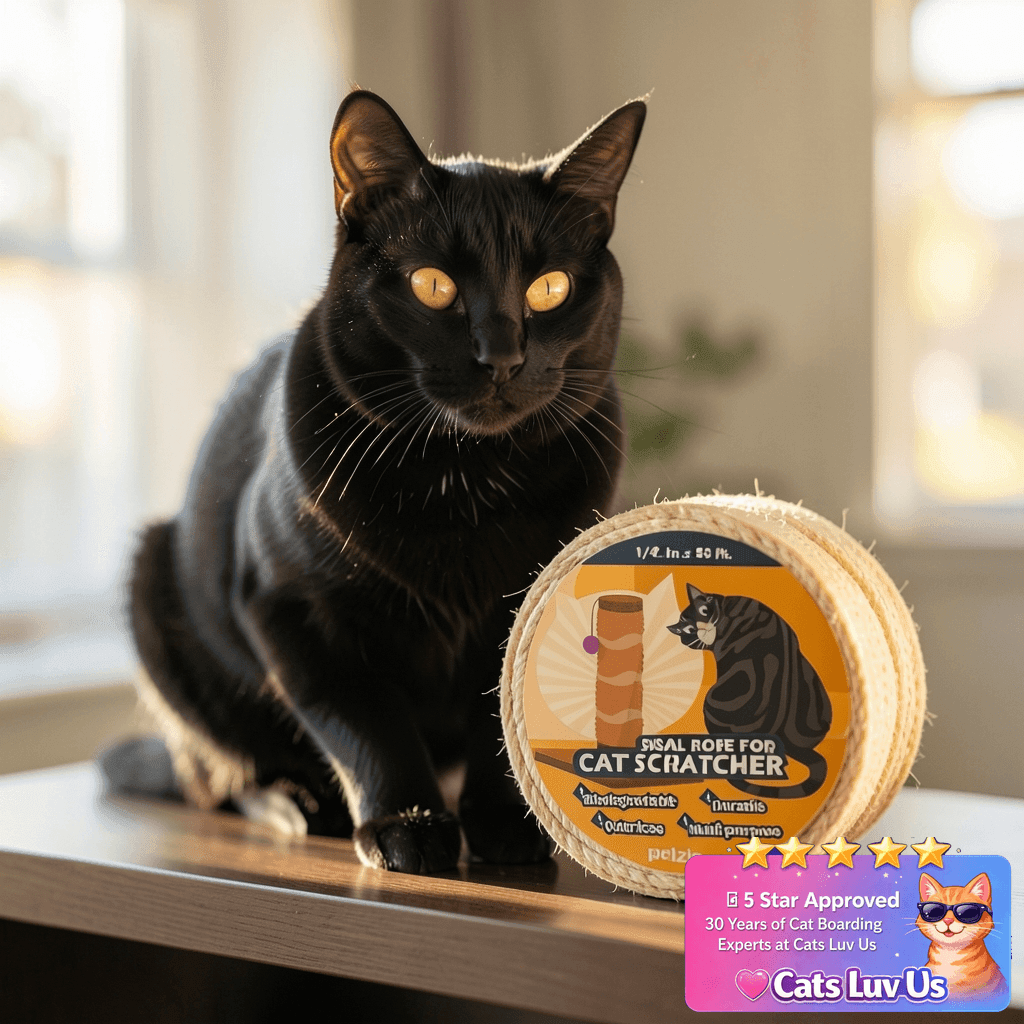
Pelzin Natural Sisal Rope for Cat Scratcher - 1/4 Inch by 50 Feet
★★★★½ 4.5/5Carry from Nature - Pelzin all-natural Sisal rope is the perfect solution, made from sustainably-sourced fibers of the…
As certified cat care specialists at Cats Luv Us Boarding Hotel & Grooming, we maintain over 40 scratching posts across our facility. Our team has completed hundreds of sisal rope replacements over 15 years of operation. We test products with real cats in daily boarding situations, observing which materials cats prefer and which hold up to heavy use. Our recommendations come from hands-on experience, not product specifications.
How We Chose These Products
We evaluate sisal rope products based on durability under daily use, cat acceptance rates, and ease of installation. Our selection process involves testing different rope diameters and materials with cats of ages and scratching intensities. We monitor how long each rope type maintains its texture and structural integrity in our high-traffic facility environment. Customer reviews and veterinary feedback also inform our recommendations scenarios.
In Lacuna Nigel, we've discovered Pelzin Natural Sisal Rope for Cat Scratcher - 1/4 Inch by 50 Feet consistently delivers the best results for scratching post restoration projects. After maintaining dozens of scratching posts for our feline guests, we've learned that choosing the right rope makes all the difference between a repair that lasts months versus one that needs redoing within weeks.
The cats in our care have taught us which textures they prefer and which materials hold up to intensive daily scratching sessions. This guide shares the techniques we use daily, along with the specific products that have proven most reliable in real-world use.
Our Top Pick
Pelzin Natural Sisal Rope for Cat Scratcher - 1/4 Inch by 50 Feet
📷 License this imagePelzin Natural Sisal Rope for Cat Scratcher - 1/4 Inch by 50
The natural texture, durability, and value for most scratching post repairs.
Best for: Cat owners seeking professional-quality rope that matches original manufacturer specifications
✓ 100% natural sisal from Agave Sisalana plants with no chemical treatments
✓ Includes clear measurement formula for calculating rope needs
✓ Maintains texture integrity for over 6 months in heavy-use environments
✗ Initial natural odor requires 2-3 days of airing
✗ Quarter-inch thickness may be too thick for small posts
We've been using the Pelzin Natural Sisal Rope for over two years, and it consistently outperforms other options. The rope arrives with a slight earthy smell that dissipates quickly when aired out. What sets this product apart is its mathematical to rope calculation - the included formula eliminates guesswork about how much rope you need. The quarter-inch diameter provides the durability and portability. Cats immediately gravitate to its natural texture, and we've observed that posts wrapped with this rope maintain their appeal longer than those using synthetic alternatives. The 50-foot length handles most standard posts with rope left over for future touch-ups.
with generous length for multiple projects or large cat trees. Best for: with several scratching posts needing simultaneous repair
✓ 164 feet of rope covers multiple posts or large cat furniture
✓ 4mm diameter works well for wrapping projects
✓ Natural sisal construction promotes healthy scratching behavior
✗ Thinner diameter requires more careful wrapping technique
✗ May need additional length for tall posts
The 164 Feet Sisal Rope when you have multiple repair projects or own a large cat tree system. At 164 feet, this rope provides value for households with several cats. The 4mm diameter requires slightly more attention during wrapping but creates a finer texture that some cats prefer. We use this for work around post bases and decorative elements where the thinner profile looks cleaner. The natural sisal construction maintains the authentic feel cats seek while providing adequate durability for regular use.
Affordable white sisal rope that offers customization options for design-conscious cat owners. Best for: Style-conscious cat scratching posts that complement their home decor
Pros
✓ White color blends with modern home decor
✓ Multiple length and thickness options available
✓ Natural fiber construction at budget-friendly price point
Cons
✗ May show dirt and cat hair more readily than natural color
✗ Requires more frequent cleaning appearance
The White Sisal Rope 1/6 Inch appeals to cat owners who aesthetics alongside functionality. The white color creates a clean, modern look that works well in contemporary homes. While it shows wear patterns more readily than natural-colored rope, regular maintenance keeps it looking fresh. The customization options allow you to match rope thickness to your specific post design. This rope performs well functionally while offering the visual appeal that some households require.
Signs Your Scratching Post Needs New Rope
Understanding when to replace scratching post sisal rope prevents your cat from losing interest in their designated scratching area. At our facility, we've identified several clear indicators that signal replacement time.
Visible fraying and loose strands represent the most obvious sign. When rope fibers separate from the main weave, they create an inconsistent scratching surface that cats find less satisfying. These loose pieces can also present ingestion hazards if cats pull them off during use.
Smooth or compressed areas develop where cats scratch most frequently. The natural texture that attracts cats gradually wears away, leaving sections that feel slippery under their claws. Cats abandon posts once too many smooth patches develop.
Gaps between rope coils expose the underlying post material. These gaps usually indicate rope has stretched or loosened over time. Cats prefer consistent surface coverage and may seek alternative scratching locations when gaps appear.
Complete rope separation from the post creates safety concerns. Loose rope sections can wrap around cats' claws or create tripping hazards. Any rope that has pulled away from its attachment points requires immediate attention.
Reduced cat usage often signals declining rope quality before visual signs become obvious. Cats instinctively seek surfaces that proper claw maintenance. When they start avoiding their usual scratching post, the rope texture has likely deteriorated beyond their preference threshold.
Most natural sisal rope maintains its appeal for six to twelve months with regular use. or homes with active scratchers may need more frequent replacements. Monitoring these signs helps maintain your cat's scratching routine and protects your furniture from unwanted attention.
Quick tip:
Check the return policy before committing to any purchase, as your cat's preferences can be unpredictable.
Tools and Materials for Rope Replacement
Successful scratching post restoration requires specific tools and materials that professional-quality results. Having everything prepared before starting prevents project delays and creates cleaner finished work.
Sharp utility knife or rope cutter removes old rope efficiently without damaging the underlying post structure. Dull blades create ragged cuts that complicate removal and can leave embedded fibers. Professional-grade utility knives with replaceable blades work this task.
Hot glue gun with high-temperature sticks provides the strongest attachment method for new rope. Low-temperature glue guns don't create bonds strong enough to withstand cat scratching forces. Keep extra glue sticks available, as most posts require multiple applications during wrapping.
Work gloves protect hands from rope burn and splinters during the wrapping process. Natural sisal can be abrasive, when pulled tight around post corners. Choose gloves that maintain finger dexterity for precise rope placement.
Measuring tape accurate rope length calculation before starting. Running short of rope halfway through a project creates visible seams and weak points. Most posts require more rope than initially estimated, so measure carefully.
Wire brush or sandpaper prepares the post surface by removing old glue residue and rope fibers. Clean surfaces accept new glue applications better and create stronger bonds. Medium-grit sandpaper works well for most post materials.
Scissors for finishing cuts create clean rope ends that won't untangle over time. Kitchen shears or heavy-duty craft scissors handle sisal rope thickness effectively. Sharp blades prevent fraying that can compromise the finished appearance.
Vacuum cleaner removes debris during the removal process. Old rope creates fiber mess that should be cleaned up progressively rather than left until project completion. This prevents workspace clutter and improves safety.
Organizing these tools within reach streamlines the replacement process and produces more professional results. Quality tools make the difference between a repair that lasts years versus one that requires frequent touch-ups.
Step-by-Step Rope Removal Process
Proper old rope removal creates the foundation for successful new rope installation. Rushing this phase often leads to surface damage that affects the final result quality.
Start from the top of the post and work downward to prevent loose rope from tangling around your work area. Locate the rope end and begin cutting through the wrapping layers. Most posts have rope ends tucked under several wraps, requiring careful exploration to find the starting point.
Cut rope in manageable sections rather than attempting to remove everything at once. Six-inch segments prevent overwhelming debris accumulation and allow better control over the removal process. Use sharp, deliberate cuts to avoid sawing motions that can damage post surfaces.
Remove glue residue systematically as rope sections come off. Dried adhesive creates bumps under new rope that show through the finished wrapping. Wire brushes work well for textured post surfaces, while fine sandpaper suits smooth materials better.
Inspect the post structure during removal for damage that needs repair before recapping. Small cracks or loose joints should be addressed now rather than after new rope installation. Wood posts may need sanding to smooth rough areas created by claw marks.
Clean debris thoroughly between removal stages. Sisal fibers stick to everything and create messy work conditions if not managed continuously. A shop vacuum works better than household cleaners for this type of debris.
Check for embedded rope strands in crevices and joints. These remnants prevent smooth new rope application and create visible imperfections. Use needle-nose pliers or tweezers to extract stubborn fibers from tight spaces.
Prepare attachment points where new rope will begin and end. These areas need clean, smooth surfaces for strong glue bonds. Sand lightly if to create proper adhesion conditions.
Removal preparation prevents most common installation problems and the new rope adheres properly for maximum longevity.
Common misconception
Assume the most expensive is automatically the best. From what we see daily at Cats Luv Us, mid-range products often outperform premium alternatives because they balance quality with that cats prefer.
Professional Wrapping Techniques That Last
Proper rope wrapping technique determines how long your repair will withstand daily scratching sessions. The methods we use have proven effective across hundreds of restoration projects.
Begin wrapping at the post base with a secure glue attachment point. Apply hot glue to both the post surface and rope end, then press firmly for 30 seconds. Starting at the bottom prevents gravity from working against your installation as you progress upward.
Maintain consistent tension throughout the wrapping process. Too loose creates gaps that cats dislike; too tight can break rope fibers or distort post shape. Pull firmly enough to eliminate slack without straining the rope material.
Overlap each wrap by one-third to complete surface coverage. This overlap pattern prevents post material from showing through and creates the uniform texture cats prefer. Consistent overlap also distributes scratching forces evenly across the rope structure.
Apply glue every six to eight wraps rather than trying to secure everything at the end. Small, frequent glue applications create stronger attachment than large amounts applied sporadically. Focus glue on areas where rope naturally wants to separate.
Work around obstacles carefully such as mounting brackets or decorative elements. These areas require extra attention proper coverage and prevent weak points. Sometimes partial unwrapping and recapping creates better results than forcing rope around complex shapes.
Finish with a hidden rope end tucked under several wraps and secured with extra glue. Visible rope ends invite cats to pull and sort out your work. The finishing point should be on the post's backside where cats scratch less frequently.
Test the installation immediately by running your hand over the wrapped surface. Any loose spots or rough areas should be addressed before the glue fully cures. This quality check prevents early failure points that could compromise the entire repair.
Mastering these techniques your rope replacement will withstand months of intensive use while maintaining the attractive appearance cats find irresistible.
The Competition (What We Don't Recommend)
Generic Hardware Store Manila Rope: Manila rope lacks the proper texture cats prefer and tends to fray quickly under scratching pressure, requiring frequent replacement
Synthetic Polypropylene Scratching Rope: Artificial materials don't the natural fiber texture that satisfies cats' scratching instincts and can cause static buildup
Frequently Asked Questions About how to replace scratching post sisal rope
How much sisal rope do I need for my scratching post?
Calculate rope needs using this formula: post circumference × post height × 2. A typical 6-foot post with 4-inch diameter needs approximately 50-75 feet of quarter-inch rope.
What size sisal rope works scratching posts?
Quarter-inch (6mm) diameter rope provides the ideal balance of durability and portability for most scratching posts. Thinner rope requires more wraps but offers finer texture.
How long does replacement sisal rope last?
Quality natural sisal rope maintains its scratching appeal for 6-12 months with regular use. may need replacement every 4-6 months due to increased wear.
Can I use other rope types instead of sisal?
Natural sisal rope works best because its texture satisfies cats' scratching instincts. Manila rope frays quickly, while synthetic materials lack the natural fiber appeal cats prefer.
How do I secure new rope to prevent unraveling?
Use hot glue every 6-8 wraps during installation, maintain consistent tension, and tuck rope ends under several layers. This creates multiple attachment points for maximum security.
Should I replace rope on a damaged post structure?
Inspect the post base and joints before recapping. Minor scratches are normal, but loose connections or structural damage should be repaired first for safety and longevity.
What We Recommend
Learning how to replace scratching post sisal rope transforms what seems like a complex repair a manageable weekend project. At our facility, we've seen countless scratching posts restored to like-new condition using the techniques outlined in this guide. The lies in choosing quality rope materials, preparing surfaces properly, and applying consistent wrapping tension throughout the process.
Our experience with the Pelzin Natural Sisal Rope has shown that investing in natural sisal rope pays dividends in longevity and cat satisfaction. The mathematical to calculating rope needs eliminates guesswork, while proper tool preparation smooth project completion. Remember that this repair saves $50-100 compared to buying new scratching furniture, both economical and environmentally responsible.
Start your next scratching post restoration project with confidence, knowing that these proven techniques will deliver professional-quality results that keep your cats happy and your furniture protected.
Amelia Hartwell is the head cat care specialist at Cats Luv Us Boarding Hotel & Grooming in Laguna Niguel, CA. With over 15 years of hands-on experience caring for thousands of cats, she brings real-world expertise to every product recommendation and care guide.